Friday, October 4, 2013

Optimizing AAA Games for Mobile Platforms...


Of Epic Proportions


In the process of doing some research on optimizing game engines I happened to come across this little gem of a presentation online and couldn't help but discuss it for my blog this week. This particular jewel I speak of comes in the form of a GDC Booth Presentation by Niklas Smedberg, Senior Engine Programmer at Epic Games. Although this presentation deals heavily with the graphical side of the implementation, Smedberg brings up several interesting points to make note of for general engine optimization. 

Information on this blog can be found here and the video of the presentation can be viewed here. 


A man and his machine

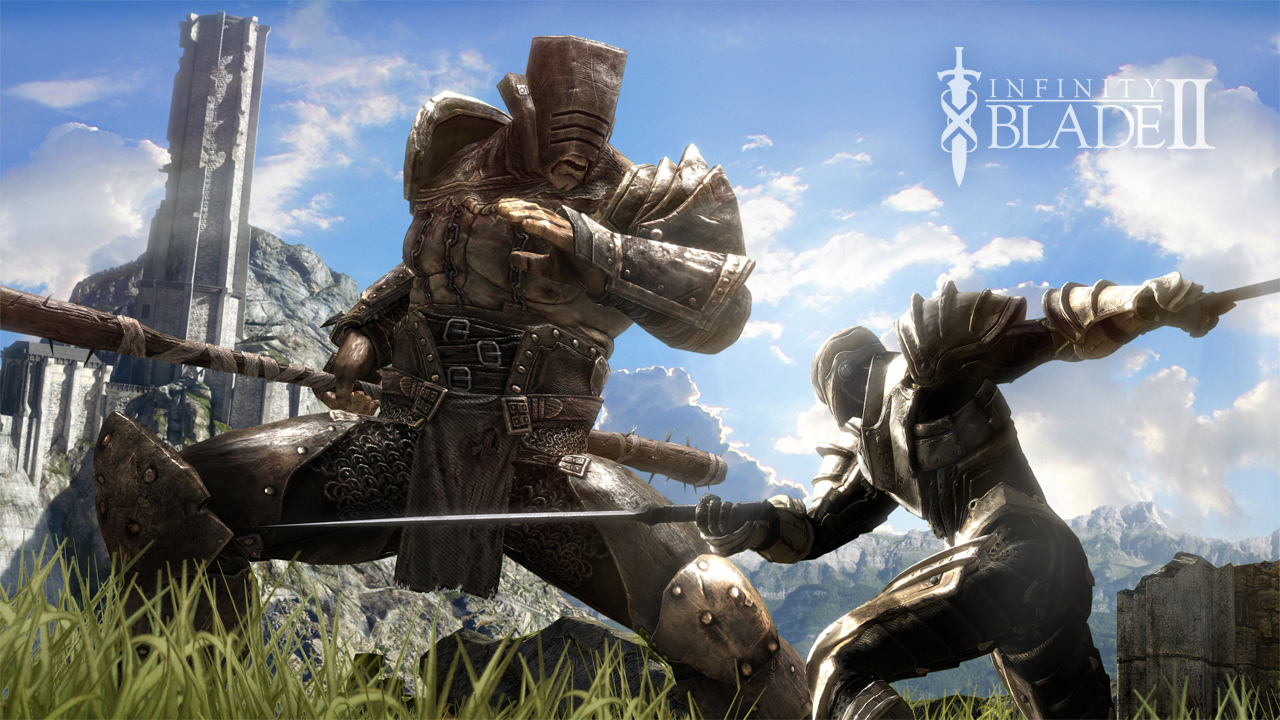
Niklas Smedberg is the Senior Engine Programmer at Epic Games and has worked on the Unreal Engine amongst his fifteen years in the industry. He has thirty years of programming and is one of the main developers responsible for Infinity Blade 2. He begins his talk touching on the architecture of mobile GPUs, so let's start there.

Traditional GPUs would make use of a processor like the NVIDIA Tegra. Tile-based GPUs, like Mali GPUs, are very different from desktop or consoles and are more commonly found on smartphones and tablets. These split the screen into tiles, each 16x16 pixels in dimension with a whole tile fitting in the GPU registers. All drawcalls for one tile are processed and the final result is written out to the RAM. This process is then repeated for each tile till the entire image is in the RAM. The rendering process for ARM's Mali begins with Software moving on to the Command Buffer and then Vertex Processing. Tiling is next followed by Intermediate Data, Pixel Processing and finally the Frame Buffer. 

The Mali GPU has a pipeline with arithmetic and logical units (ALU which primarily takes care of mathematical needs) and a shader program which processes the graphics. There are 128 shader threads and every clock cycle the system pushed one shader instruction into the pipeline before switching to the next thread. This is similar to hyperthreading on the CPU but way bigger and parallel. There are also 128 pipeline stages which culminate to return one result per clock cycle. This means that in 128 clock cycles, the shader unit manages to wrap around to the first shader thread and the cycle begins once more. This whole system works like cogs chugging constantly in a very structured framework which makes the GPU efficient in processing. 


The platform

On a power-limited handset (this of course is relative to a console or PC) memory access can be expensive so when we keep our render target on a chip, we save power by keeping it all contained within the GPU. Which mean speed due to no bandwidth cost for drawing or alpha-blending, cheap depth and stencil testing (since it's all just read form the GPU), and cheap MSAA (Multisample anti-aliasing). In fact it is possible to see 0-5 ms cost for MSAA, which is terrific, however you should also be wary of buffer restores in terms of colour or depth. At the end of the day, you simply need to resolve the final smaller buffer to memory. 

There have been developments in the Mali processor with the new T600 which features not only a unified shader unit but OpenGL ES 3.0 among several other improvements from the Mali 400. With all this said there are of course caveats with the architecture of tile-based GPUs as with any piece of hardware. For one, if you ever leave the boundaries of a tile (say for the purpose of blurring across the screen) and switch render targets it will cost you. This is because the GPU has to process all the tiles and then write back out to memory. Another issue is that there is no "free" hidden surface removal, you have to cull and sort drawcalls from front-to-back (this means big occluders first and the skybox last). The GPU also lack texture compression for RGBA textures forcing the use of either uncompressed RGBA or two compressed RGB textures. Also, even though the T600 supports OpenGL ES 3.0, there are no current mobile platforms (Android or iOS) that support it. 

Now let's talk about managing the render buffer.


Rendering & Mobile Materials

It is important to remember not to switch back and forth between render targets as each target is a whole new scene. Switching slows the entire GPU down so it is potentially possible to not have a dependent drawcall right after you switch so you can send your data out to RAM and use it a little bit later. When you are switching to another render target you should make sure you clear everything including the colour, depth and stencil buffers to avoid buffer restore (this essentially just sets some dirty bits in a register but helps a lot). It is also better to avoid a buffer resolve and use a discard extension instead (GL_EXT_discard_framebuffer). Avoid unnecessary FBO combos by which you make sure the driver does't think it needs to start resolving and restoring any buffers. 

The Unreal Engine materials are often very advanced. The programmers usually give full power to the artists causing the shader graphs and nodes to be as large as they want it. In order to make this system more programmer-safe on the mobile platform, specific functions were written for the artists to choose between them instead of having them write the shader themselves. Earlier, there would be a tremendous amount of different shaders for every object which would take far too long to compile on a mobile device. So what the programmers did was to pre-render the entire complicated material into a single texture and then re-texture the output colour. But they wanted to improve this system further and so they decided to pre-render components into separate textures, added mobile-specific settings and had feature support driven by artists. On the programming side, they had one single hand-written ubershader for all materials driven by #ifdef's which allows them to simply click a checkbox to enable that specific portion of the shader code. 


God Rays

To give you an idea of the amount of optimization required to move a AAA title to the mobile platform, let's take a look at how Smedberg incorporated God Rays into Infinity Blade 2. To begin, he ported the code from Gears of War on XBox 360 to OpenGL ES 2.0. This worked but of course it was very slow which meant more mobile-specific optimization which began with moving all the mathematical calculations from the pixe to the vertex shader. He then went on to pass down the data through interpolators which he quickly ran out of since most mobile platforms limit the number of interpolators to 8. So he split the radial pass into 4 draw calls which meant 32 texture look ups in total (which is the equivalent of a 256 blur kernel). Therefore the mobile version runs faster and looks better than it did on the 360!

While the original shader code looked something like this:


The mobile shader code looked more like this:


Which turned out to be both prettier and faster!

Step by step, this is how the process works:

  • On the first pass, the scene is downsampled, pixels are identified, the RGB values relate to the colour from the scene while the Alpha value is the occlusion factor. This is resolved to a texture as an "unblurred source".
  • The second pass takes 8 lookups from the unblurred source on an opaque draw call and then another 8 lookups to an additive draw call. This is then resolved to another texture as a "blurred source". 
  • The third pass, fourth and fifth passes are the same as the second leading to the final result which is also resolved to a texture. 
  • The sixth pass switches back to the normal scene where they clear the final buffer and move to a new render target and create an opaque fullscreen quad which composites the God Ray blur and the background scene.


Shadows

Smedberg used several techniques for shadows in the game one of the most common of which was ported once more from the XBox 360. Using this fairly standard method, a shadow depth buffer is generated from the light's viewpoint so that you have a texture. You then stencil out the pixels on the scene that may be in shadow and then compare the shadow depth and scene depth. If it is a shadow, darken it. 

In essence, the character's depth is projected from the light view into a texture. Then it is reprojected into the current camera view so that a comparison can be made with the scene depth and modulate accordingly. Then the characters are drawn on top of the shadows (which means no self-shadow). It is possible to include the characters in the depth comparison but the high precision is required for the comparisons or else artifacts will show up easily.

To optimize shadow rendering, there were a couple of tricks performed including generating all shadow depth textures first in the frame in order to avoid render target switching. ARM has the ability to compare with background depth for free which could reduce the cost of shadows by at least eighty percent. Essentially, the background depth would just be read from a register. This is also very useful for any depth-blend operation which means particles will be able to have soft interactions against the world geometry instead of clipping. 


In Conclusion

The Mali has a very streamlined hardware architecture and is also very data-driven which makes it easier to program and use. The Mali 400 has 16-bit precision with any mathematical calculation in the pixel shader and has free access to the background depth value.

While a lot of this information is specific to graphics on the mobile platform, there are a lot of good lessons about optimization to be learnt from Niklas Smedberg who managed to bring a superior gaming experience to the mobile platform without surrendering performance for aesthetics.


Tuesday, October 1, 2013

Knowledge Keeper Quest 1...


Play Spaces & Level Design

This week's online lecture was quite interesting and got me thinking of level design elements in a lot of the games I play. Throughout the course of the lecture, a lot of intriguing questions about gameplay versus spatial design were brought up and resolved by Dr. Nacke - more detail on this later! We learnt about incremental learning within games, the golden rules of level design, goal scoping and game design as well as level-wide hierarchies, level design modules, linear vs. non-linear vs. semi-linear levels, and finally, methods of level design. 

It is important to keep in mind that while a game designer is in charge of designing the rules of gameplay, the level designer designs how a player is made to realize these rules and how they will come to learn and interact with them as play continues. Level design then is essentially "putting theory into practice".

This blog is aimed at summarizing some of the more important information presented in the lecture and expanding upon what I learned from all of it. With that said, let's dive right in, shall we?


Incremental learning


Common in video games is the learning curve associated with the introduction of a new weapon, ability, skill or power. Games, like Assassin's Creed, introduce a new mechanic (hidden blade) before taking the player through a tutorial (straw dummies) where they learn the basic application of such a skill. As time goes on and the player continues to make use of the mechanic wherever they see fit (assassination missions), they become well versed in how it enhances gameplay. Sometimes challenges are placed before the player forcing them to use the new weapon/ability in order to progress and be on their way. Here is where the player encounters a use for a mechanic they might have simply overlooked and not thought crucial to story progression. In games like Assassin's Creed, optional objectives (get to 100% synchronization on a given mission by using the hidden blade to assassinate the target) play the part of challenging the player to make use of a weapon/ability in order to stick more closely to the main plot of the story. 

Some games use achievements to entice players to play the game with certain weapons equipped to get a taste for them and to help the player develop their own unique playing style. Other games throw several mechanics/weapons/abilities at a player with a short explanation and present obstacles for the player to overcome using anything they'd like. Portal and Portal 2 do a great job of this as they present a new mechanic and leave it up to the player to figure out how to use it to their advantage. Once the problem is solved, the player feels a deep sense of accomplishment in figuring out the puzzle for themselves using everything they've learnt so far. However, this can also be a double-sided coin as some players feel that they must follow the specific path set out by the level designer in order to get the most out of the game/story or in order not to miss certain crucial plot points. 

As a level designer it is your job to present the rules to the player in an interactive manner and to help them find a way to overcome obstacles in their path using a specific set of skills and tools which adhere to the rules of the game world. You are essentially testing the player's proficiency. Through such tests and guidance you are essentially helping the player realize the potential of their character, what their restrictions may be, what constraints the world places on them and how their opponents behave. In addition, this type of design reveals the game's reward systems as well as the limits of the game world.


Golden Rules


One of the foremost rules when it comes to level design is to be consistent with mechanics in making sure they behave the same way in every instance in order not to confuse players. For example, in Bioshock, electricity is used in the form of a plasmid to shock busted electric doors open. Say the level designer simply decided to change this mechanic to make it so that fire now opens electric doors, the player's progress would immediately be hindered and instead of trying to use fire on the door, they would spend their time trying to use electricity innocently wondering why the primary mechanic isn't working. 

Consistent mechanics form patterns in the player's head and help them solve problems with the specific tool set given to them. In a game like Portal 2, where a combination of game mechanics is imperative to progression, the player must be confident with what they believe will work based on what they know about their abilities and the obstacles place din the environment they have come across so far. 

Another important rule in level design is never to require a skill that you have not yet taught the player to use in a safe environment. In Ratchet and Clank, the player may notice grind rails all over the game world in places inaccessible to the player till they receive grind boots. Once in their possession, the player may travel back with their boots to places previously unreachable in order to traverse grind rails and obtain prizes for backtracking and making use of a new skill. This way, the player sees the new mechanic as a key to a whole new world of possibilities.


Hierarchies


What, why and how are important questions for a designer to ask themselves when making a game. Not only are these questions relevant and important on a level to level basis, but they are crucial for an a overall game design structure as well. Every designer begins with a success definition and then moves down the game or level design hierarchy. While both are very similar in structure, the level design hierarchy may be considered more internal and specific to gameplay mechanics. 

A Success Definition encompasses everything that would make the game successful in the eyes of its developers and designers. Whether it's an indie game and must sell a lot of copies or whether it's a commercial game made to promote the Coca-Cola Company. Success is how you define it. External goals relate to what makes the company successful and what features generate revenue whereas internal goals focus on what is needed for certain gameplay designs to work within a  level and how this relates to overall success in the game. While your Success Definition answers the question 'Why you're doing it?', game design deals with 'What you're doing', and level design deals with 'How you're going to do it'. 

The level-wide hierarchy breaks down even further into external and internal design goals which outline the mechanics you will use to achieve success in your levels as well as the design scenarios, gameplay moments and gameplay actions that help the player buy into whatever it is that you're selling. 

It is imperative to keep in mind your reasoning behind the design of a specific level and what you were trying to teach the player in doing things one way instead of another. This way, should you no longer be able to introduce your player to a new mechanic due to technical shortfalls, you would find an alternate method to demonstrate your design with the underlying core principle remaining untouched. 


Linearity


Linearity in game and level design is important when considering your success definition and what you as a designer are striving to portray through your gameplay mechanics and rule structure. There are linear, non-linear and semi-linear games. Linear games offer good control for level design and provide pacing and consistency yet constrain player freedom. A good example of this would be in God of War. When trying to traverse the environment often one can get blocked by an obstacle and despite the beautiful environment that seems to invite the player to explore, there isn't much room to do so as the level designers intent was to keep the player on a linear path. The camera assists greatly in this task in being fixed for most scenes in the game. 

Semi-linear games like Borderlands or Diablo afford the player the opportunity to explore on their own by breaking away from the main quest to complete side missions thereby giving them the chance to explore the game world on their own. This is good way for a level designer to create the illusion of player freedom while making sure the player must complete important tasks designed to aid in their progress through the game. Sometimes side quests are made shorter and re-visit similar game mechanics in order to encourage players to stick to the main storyline missions - Borderlands does a particularly good job of this as side missions are set up to be nothing more than a good way to earn extra XP.

Non-linear levels are also known as sandbox games, such as Minecraft, and give the player complete freedom to explore the game world and feel a sense of gameplay ownership. Players take responsibility for their own triumphs and failures. Though a lot of players prefer these kind of games, they are extremely hard to test on the game design side and often break easily. In this case, it is the responsibility of the game designer to maintain the game with constant patches and updates should players run into bugs and glitches that halt gameplay and progression. 


Level Design Methods and Conclusion


With all there is to learn about level design and play space, it is important to keep our thoughts organized while letting our imaginations run wild. Annotated maps and flow charts help designers layout their ideas and give them an overall game structure to look at after taking a step back from their designs. Freytag's pyramid and event diagrams help put events in the right places within a level and ensure that a player isn't introduced to a mechanic to early or too late in the game. 

Level design, while fun, can be challenging and unrewarding if not done right. There is a lot of user input involved in designing games nowadays as most mechanics are used up and players are looking for something fresh and unique to pique their curiosity and hold their attention. Always remember to keep your internal and external goals close to mind when designing levels and never forget to challenge and surprise the player at every turn. 


Friday, September 27, 2013

Doom 3 Post Mortem


The Aftermath

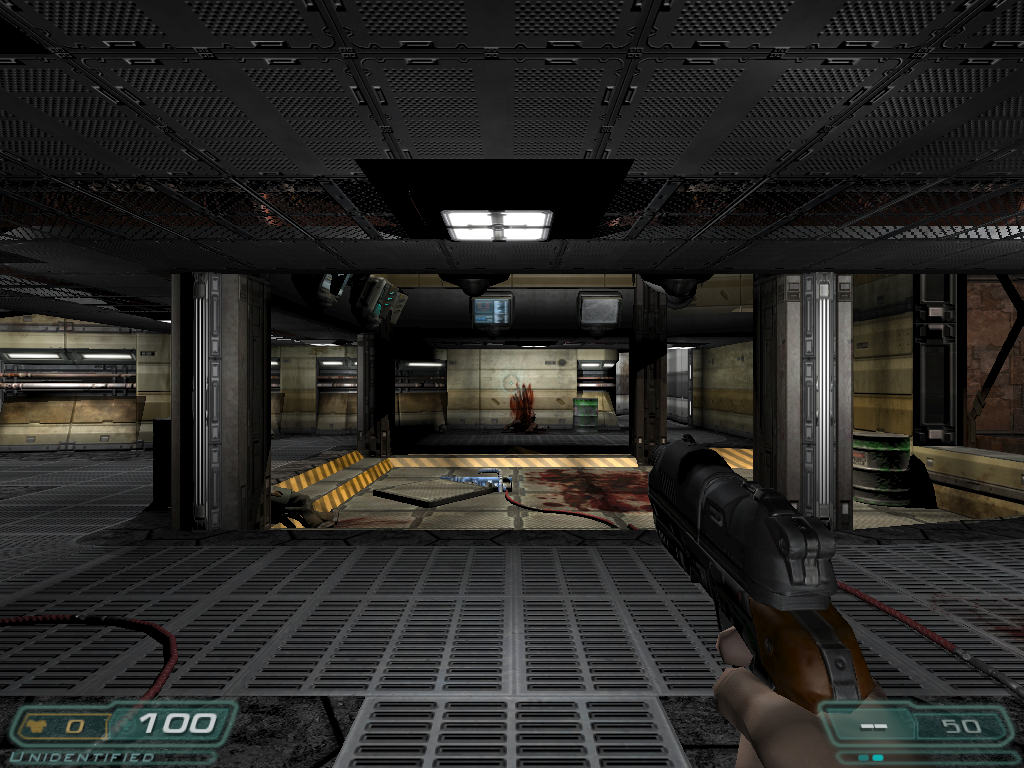
Perusing the source code of id-Tech 4, the engine responsible for creating the legendary title, Doom 3, I found it interesting the way the game was structured and the routes and conventions the developers decided to go with when putting the engine together. Delving further into the topic, I stumbled upon a rather interesting talk on the Postmortem of Doom seventeen years after the game was released. The talk was both informative and funny (as game developers often are). The following blog is a summary outlining some of the key points of the talk that I found particularly fun to discuss among the general public. And of course, if you haven't played Doom yet, GO! Seriously, why are you still reading this? Go play it. Now. Please? 

The information on this blog was a result of the viewing of John Romero and Tom Hall's talk on Doom's Post-Mortem at GDC 2011 and can be found here. 


In the Beginning


In 1991, Id Software was composed of four individuals, artist Adrian Carmack, programmers John Carmack and John Romero, as well as game designer Tom Hall. Towards the end of 1991, Steve Jobs came out with something called a 'NeXT' computer which peaked the interest of the team at id. After an $11,000 investment on the NeXT computer, id went on to develop Wolfenstein 3D for DOS, using the NeXT Cube for the game's hint manual. They were asked to port the game over to the Super Nintendo and so the had a developer come in and work on this while the team continues pursuing other titles. 

After a series of FPS games (Hovertank One, Catacombs 3D, Walfenstein 3D, Spear of Destiny) with which the team had plenty of time to experiment with textures and tools of the trade, id decides to try something different with Doom - but we all know that's not really true at all. After brainstorming ideas for Doom and after a lot of Dungeons and Dragons, the guys at id decided to make a game with demons and by the end of November Tom Hall had already created a Doom Bible. The Bible was meant to be more of a design document for the game, outlining where all the levels were, the nomenclature, the tools, the progressions one goes through, etc. Hall was interested in pursuing a level-by-level progression through the game to give the player checkpoints where they could feel a sense of accomplishment upon completion of a rather difficult level. At the same time, John Carmack was beginning to think about the tech involved in the production of such a game. He began by laying down some of the data structures and upon stepping back and taking a look at the system as a whole wanted the game to appear as a singular giant world. At this point, the team begins projecting their memory usage for a project this big soon realizing that their scope was far too large to begin with. After weeks upon weeks of intricate design, Hall is told that there's no way for them to be able to fit all his designs within the final game. There just wasn't enough memory (only about a megabyte allowed). It was quite apparent that as a programmer, Carmack was trying to get the latest technology out on the market with Doom while Hall was trying to give the game the best and most innovative design causing both members to clash heads. 


Coming together


During the production of Doom, there was never a time when the guys at id would draw something, think about where to go with it and then decide whether or not to put it in the game. Once an asset was drawn, once an idea was put on paper, it was definitely going in the game. By January 1993, the technology and the art was in the works and feeling quite confident with their abilities, the team decides to put out a Press Release stating their hopes and aspirations for the game as well as the main features they intended on having (three or four of these didn't even make it into the game). Adrian Carmack , the studio's artist, modeled figures in clay and then put them in front of a camera that would read the model and represent it pixel by pixel. Unfortunately the lights placed on the clay figures would cause them to melt making this method inefficient. 

Id had the engine itself up and running relatively quickly and took some screenshots and alphas of the original stages of development. While Hall attempted to mimic military building designs for levels, Carmack tried to stress optimization and making the game run as smooth and as fast as possible. Due to Carmack's concerns with every environment's polygon count, Hall had to get back to the drawing board and design orthogonal and occlusive shapes. Hall ended up making a bunch of levels composed of blocks which weren't much more than corridors with rooms to go into. Around this time they were also experimenting with the U.I., shooting designs back in forth between Hall and Adrian Carmack (the designer and the artist). The team actually went out and bought toy guns and held them in front of the camera to model their final designs behind. 


Doom - Evil Unleashed was the first pre-alpha release of the game using the data structures Carmack had come up with and all the current designs implemented for testing purposes. With their initial designs, the team realized that the player wasn't getting much of a good view due to too much UI "crap" as they call it. Luckily the game was at a stage where if things didn't work too well, they could afford to just take it out. 

In March of the same year, 20th Century Fox contacted the team at id and offered them the license to Aliens in order to produce a game based on the movie. Although the entire team were big fans of the movie, they decided to turn the offer down in exchange for continuing to run with their original idea for Doom. 

Work continued on as scheduled and now Romero was attempting to make the levels feel a little bit more realistic and recognizable experimenting with contrasts in room height and lighting.   


Disaster strikes and Doom continues


Remember earlier when I told you that someone tasked id to port Wolfenstein 3D to the Super Nintendo? Do you remember when I said that they had a guy working on it? Well that guy didn't manage to finish on time and Imagineer (the company that requested the port) was not pleased at all. It had been nine months since they had been in contact with Imagineer and when asked about the status of the port, id realized that they couldn't get a hold of the guy working on it and would have to halt production of Doom to fix this problem. In the end, they managed to push the final game out in an amazing three weeks. 

Once Doom resumed production, something truly great took place. After a recursion problem with receding stairs, John Carmack noticed that the game was beginning to look really good and instead of asking Hall to fix the design, he took it upon himself to solve the problem so that the aesthetics could live on. The resolve of this problem eventually lead to the BSP Tree (based on the idea by Bruce Nailer) which helped with helped cull out non-visible sectors inside of a level. 


On April 2nd, 1993 id felt confident that they had reached what felt like an Alpha milestone in Doom's production and so made the decision to release the game in its current stage to Beta testers. In May, the team released another Pre-Beta build of the game which featured a lot more textures, a better UI, a menu system, skill levels and monsters of varying difficulties. In addition to this, the game run a lot smoother and started looking more and more like the end product. 

In June, Computer Gaming World (a very popular magazine) did a preview of Doom right in the middle of development. By July, Doom had a lot of variety in monsters thanks to Hall fighting to have constant surprises for the player in terms of enemy types. Despite this win, Hall felt he was being restricted creatively and that his designs were constantly being shot down in pursuit of a faster-paced shooting game. In August of 1993, Tom Hall decides to leave id and goes to Apogee where he works on Wolfenstein II for a bit before creating Rise of the Triad and Prey. At the end of the day, this worked out best for everyone on the team since Hall was happily able to release his creative juices while Romero and Carmack could go back to doing awesome stuff with Doom on the programming and optimization side of things. Neither side was weighing down the other anymore. 


The Final Stretch

After Hall departed from id, the team hired a couple of developers (Dave Taylor and Sandy Peterson) to help with finishing the game on time. Into September the team was making good progress on the automap in addition to pumping out tons of levels and adding DMX sound drivers. In October, a pre-release is revealed two months from release with a lot more textures, a better-looking UI, way better lighting and just overall playable environments that worked well with the theme of Doom. Players could pick up items and the game would keep track of them. At the time, Romero considered the game pretty new school and so decided to avoid the arcade tactic of setting a player back to the start once all their lives were depleted. Instead, he had the player reset to the beginning of the level upon dying as well as a save feature which allowed players to save at any point during the game, down to the second giving way to a high probability of players actually getting to the end of the game and beating it. The next step seemed to be the final game. 

November comes around and the first IPX multiplayer was created as was Deathmatch, co-op mode, the game's final systems, intermissions, menus, installation, text files and serial code for modems. All the game maps were also modified for Deathmatch and co-op play. The development team was spending more and more time at the office putting tons of polish on the game while hype steadily grew thanks to fans in eager anticipation of a game that had been in production for a year now. 

In the final stretch the team pulled a 30 hour no-sleep work session where everyone would be running the game on every machine looking for last-minute bugs. A bug concerning the timers the game had implemented arose but luckily the team had so much experience with the engine and tech at this point that fixing it didn't take all that long. Finally the game was uploaded to the University of Wisconsin's FTP server essentially crashing the entire server and preventing anyone from logging on to download the game while the entire file was being uploaded.

And the rest is history ladies and gentlemen...


In Conclusion


As Game Developers, we stand to learn a lot from id's experience with creating Doom. There were conflicts, setbacks and technical difficulties but what remained constant was the team's strong belief in the game and where it would go. They also believed in each other's abilities and everyone pushed to put the best of themselves into the game. I think we can all agree that the game industry is grateful for the efforts of the team at id in producing a beautiful and well-functioning title that is still held in high regard within the hearts of Game Developers everywhere. 


Thursday, September 19, 2013

The Source Engine...


The only Source of knowledge is experience

In 2004, the VALVE Corporation came out with a game engine that changed everything. The Source Engine was not only famous for its notable technology but also for the several popular titles that resulted from its design. With Counter Strike, Half-Life 2, Team Fortress and Portal among many more award-winning developments under their belt, Valve knew that the original Source Engine was just the beginning of a powerful legacy that would set standards for game engine design everywhere. 

This blog focuses on the Valve Corporation's Source Engine, some of it's more popular design elements, how it began, where it is now and what's in Valve's future. Information on this blog can be traced back to the Source Engine's Licensing Information Sheet found here. 


More than the sum of its parts

The Source Engine debuted with Counter Strike: Source which was a remake of the popular first-person shooter which pits a team of counter-terrorists against a team of terrorists in a series of deathmatch rounds where one team is crowned victorious when an objective is met or all members of the opposing team are no longer standing. The Source Engine has never had a meaningful version numbering scheme and is instead designed in constant incremental updates. Although the engine was initially created to power first-person shooters, it was later used to create everything from RPG to RTS games. 


Technology implemented within the Source Engine includes Direct3D for rendering on PC, XBox, XBox 360 and XBox One and OpenGL for rendering on Mac, Linux and PlayStation 3. High Dynamic Range Rendering is used for post-processing while a lag-compensated client-server is used as the networking model. The physics engine is derived from Havok in addition to being network-enabled and bandwidth-efficient. Source has scalable multiprocessor support with pre-computed radiosity lighting and dynamic shadow maps. Deferred lighting is supported on consoles and the facial animation system fashions auto-generated and localizable lip-syncing. Water flow effects, a blended skeletal animation system, inverse kinematics, dynamic 3D wounds, and cloth simulation are all supported among tons of other technology. The popularity of the Source Engine may be due to its significant source code access for mod teams as well as its distributed map compiler. 

Source distantly originates from the GoldSrc engine which itself is a heavily modified version of John D. Carmack's Quake Engine. Valve's development of Source has always been a mixture of licensed middleware and in-house developed code. In fact, John Carmack himself commented that

"There are still bits of early Quake code in Half-Life 2."


Man of few words, aren't you?


For the scope of the Source Engine's design, the developers at Valve were sure able to bring some very powerful technology to life. Areas of major enhancement include their character animation, advanced A.I., real-world physics, and shader-based rendering. With all this technical prowess it's not wonder that Source offers expressive characters that convey a message without having to say a word and can be both extremely capable allies and more than worthy foes. Furthermore, these characters populate beautifully rendered and physically simulated worlds that feature water refraction, HDR lighting and projected shadows which greatly enhance Source's visual fidelity. 

With robust networking code providing support for 32-player LAN and Internet games, the Source Engine is built for multiplayer mode. and includes a complete toolset for level design, character animation, and demo creation making it a modder's paradise. The Source Engine features state-of-the-art prediction analysis for interpolating collision and hit detection. The characters provide intelligent believable player interaction with simulated musculature for outstanding emotions, speech and body language. Skeletal/bone systems are present for animation and a layered animation system synthesizes complex animations out of several pieces. The worlds created are themselves more responsive with realistic interactions, sounds and graphics following from physics. NPCs can even interact with physically simulated objects and are structured with ragdoll physics. There are kinematic animated bone followers and custom procedural physics controllers. Vehicles built using the Source Engine have wheels that slip and skid, realistic suspensions, multiple player handling and tunable horsepower, gearing, max speed, shift speed, tire material, tire friction, spring tension and dampening. 


Now let's discuss the A.I., U.I. and sound within the Source Engine. Graphical entity placement allows level designers to quickly control the interactive gaming environment and sophisticated navigation allows for characters that run, fly, jump, crouch, climb stairs and ladders, and burrow underground. The characters are able to sense things using sight, sound and smell, as well as determine relationships such as friend/foe status of other entities. Battle capabilities allow squads of A.I. characters to operate together, knowing when to advance, retreat, lay cover fire, etc. The A.I. even provides for intelligent character interaction when not in combat. 

The Source Engine supports 5.1 surround sound for 4 speakers and high-quality 3D spatialization. There is custom software DSP as well as automatic DSP based on environmental geometry. There is support for audio streaming on any wave as well as real-time wave file stitching. There are even pre-authored Doppler effect and distance variant encoded waves.

The server browser displays all active game servers and allows players to select a server to join. Players may even filter and sort server lists in order to speed up the display and selection of a server. Players may use the instant messenger to chat with each other both in and out of games in addition to joining friends in existing games. Finally, Valve's GUI (VGUI) allows for both in-game and out-of-game user interface uniformity and is both platform independent and Unicode compliant. 

All code for Valve's Source Engine is written in C/C++ using Visual Studio 7.1 making it possible to quickly and easily derive new entities from existing base classes. Included is an internal context sensitive performance monitoring system and graphics performance measurement tools. DLLs allow for swapping out of core components for easy upgrading or code replacement through modular code design. Dx9 shaders are all written in HLSL as the engine allows for HLSL shaders. 


The future of Valve

One of Valve's largest projects to date is the development of new content authoring tools for Source. These will replace the currently outdated tools allowing speed and efficiency in content production. The Valve Corporation's fan site ValveTime revealed that Valve might be in development of a "Source 2" engine. This was based on coding from the Source Filmmaker that directed technology from the upcoming version. Gabe Newell, the head of the studio, has confirmed the development of this up and coming engine but remarks that Valve is waiting for a game to roll it out with. 

Although image-based rendering technology had been in development for Half-Life 2 it was cut from the engine before the game's release but was mentioned by Newell as a piece of technology he would like to add to Source in order to implement support for much larger scenes than are possible with strictly polygonal objects. 

Gabe Newell has also mentioned that he believes Linux is the future of gaming, often hinting to a gaming box built on the open-source operating environment. Since the launch of the company's online platform, developers have created 198 game on it. He hopes that this points to a future where games will be nodes in a connected economy where the vast majority of goods and services will be created by individuals not companies. 


In Conclusion

Valve's Source Engine is a remarkable feat for a large company that is revered for their modding community. The Source Engine's popularity stems from the tools which give power back to the player allowing them to being their own creativity to life in a sandbox controlled by the Valve Corporation. Not only do they sport a strong Game Engine, the foundation for great things to come, but with AAA titles in continuous release, it is no wonder that the Source Engine receives praise for its technical merit and ingenious design.


Thursday, September 12, 2013

Guess who's back...


Engines 

Ladies and gentlemen, I've got to say it is good to be back. With thoughts to spill on a page and a course worth talking about, let's jump right in. 

Game engines are the topic of discussion so this blog is going to give a you an overview of some of the breakthrough engines created in the past decade. The ones that have set the bar and those that have created an entire community of modders - individuals who like to take the idea of making a game your own to a whole nother level. So let's begin by asking the most fundamental question, what is a game engine? 


Built not bought

A game engine is a framework of visual development tools as well as reusable software components which are provided in an integrated development environment to enable simplified and rapid development of video games in a data-driven manner. Each game engine is unique and as such no one game engine may be used to design all game  genres. There is context and precision in each engine and no two are ever alike. Back in the day, companies built their engines purely to run their games and nobody else's. Eventually, gaming companies realized that there were gamers who wanted to play around with the engines they built and along came Quake II and the Unreal Engine which provided tools for gamers to let their imaginations run wild and modify what they had built.

As engines grew in complexity and structure they were put on the market and SDKs (Software Development Kits) became available for purchase and commercial use. You may be thinking, "But you just said no game engine can be used to design all game genres." While that might be true, there is still much similarity between the mechanics and game logic of many genres and with a solid engine and a lot of tweaking, a little could go a long way. Building a game used to mean starting from scratch and re-inventing the wheel - compiling all new code. So when did this change? What changed? Who helped? 

Let's find out. 

Information found on this blog has been taken from Paul Lilly's (write for MaximumPC) article on a visual history of 3D game engines found here.


I wouldn't leave if I were you, DOS is much worse

One of the many infamous quit messages from the game that sends you on a serious guilt trip when attempting to leave. Doom was most certainly one of the most memorable and important PC games of all time. The reason for this was that Doom pushed reusable game engines as a viable programming model. The best part was that id software's Doom engine wasn't really a 3D engine at all but a very well conceived 2D sector-based engine with flat sprites representing objects, characters and anything not tied down to the map. This meant a good rendering speed for the hardware of the time which only really had to be capable of handling texture-mapped environments. 

After a time, NovaLogic came out with their Voxel Space engine, introducing the concept of a voxel (a combination of the words volumetric and pixel) which was used by several games for specific rendering of in-game items or even vehicles. Voxel was a way to represent volumetric objects as 3D bitmaps instead of as vectors. Terrain was rendered in layers making graphics more smoothly contoured and detailed. This, in turn, also provided smoother gameplay.

Build followed in the footsteps of the Doom engine with Duke Nukem 3D as far as rendering worlds on a 2D plane with sprites populating on the map went. The Build engine broke the entire world into individual sectors arranged in a grid with the ceiling and floors in each sector built at a different height. This meant that, unlike in Doom, players could now look up and down. 


Enter 3D

Let's move into the world of 3D gradually and begin with the Jedi engine. The Jedi engine was responsible for Star Wars and proved highly successful in creating 3D-like environments by allowing for areas (sectors) to be stacked. Yet, not everything was 3D with models being rendered into bitmaps form different angles in 45-degree intervals. Upto 32 angles were supported for each object which would be continually rescaled as the player got closer. 

The first truly 3D game engine was the Quake engine which had to be meticulously crafted in order to ensure that it ran smoothly without a ton of processing power. One of the neat techniques used in Quake was map purging, where an area of a map wasn't processed if the player couldn't see it. This reduced the number of polygons by at least half if not much more. Additionally, the Quake engine made use of Z-buffering, included 3D light sources and supported 3D hardware acceleration. 

Renderware is one of the more popular game engines which claims over 200 game titles on several platforms making it a multiplatform game engine. Renderware allowed developers to manipulate art and game processes in real time. That means a developer could change the paint job on a car without altering the underlying code and having to render the scene all over again. Rudimentary physics within the engine worked the same way. 

The original Quake offered hardware graphics acceleration. Along came Quake II and offered native OpenGL support and included coloured lighting effects and a new game model which allowed for both software and OpenGL renders instead of having to choose between the two. As mentioned earlier, Quake II was known for its moddability when id released their source code into the modding community in 2001 while still keeping the rest of their engine proprietary. With such a robust game engine, savvy developers were able to use it to power full-fledged role-playing games with additional features.


The Unreal engine was the main competitor to Quake II and also happened to become a popular engine in the modding community. UnrealScript was the engine's very own scripting language which was bundled with the game along with a map editor and UnrealEd (a modification program). Software and hardware rendering were both present in the Unreal engine amongst collision detection, colored lighting and rudimentary texture filtering. 


In Conclusion

With the gaming technology on the rise, there is room for a lot of growth in the game engine territory. There is so much we have yet to see and so much we have to build on. Continuing innovation gives us hope for games to grow closer and closer to reality. We look back at all the engines that have preceded our time and we admire the ingenuity of developers back then. But we also use their design patterns, their ideas and their motivation to build better and more efficient engines that will power the games of tomorrow.

It's good to be back.